
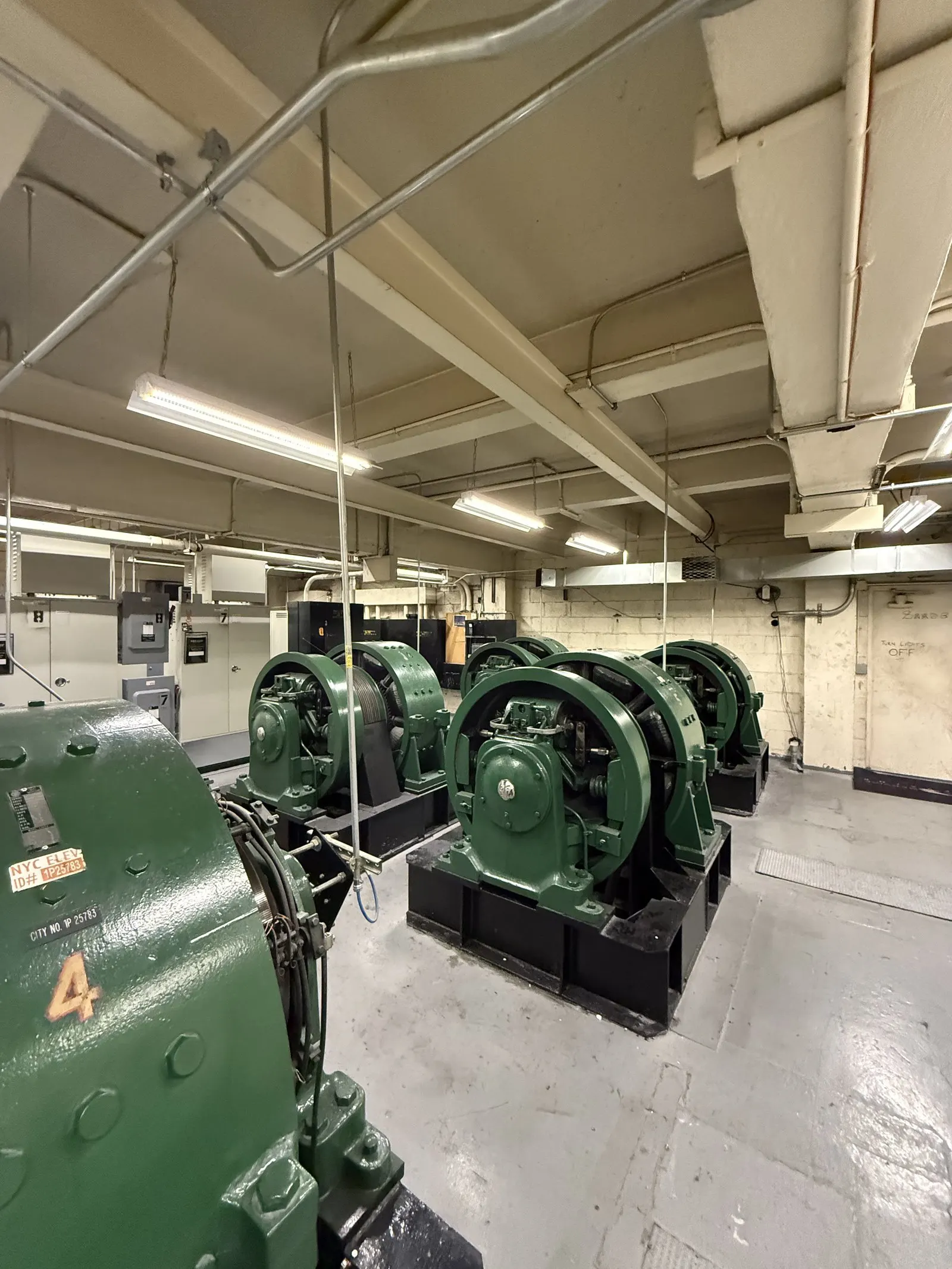
NYC Compliance Guide
NYC Elevator Violations: How Do I Look Up, Pay, and Clear Them?
How to look up NYC DOB elevator violations by address or BIN, then challenge, waive, or pay them in DOB NOW and get them dismissed for good.
Most elevator violations don’t show up because someone walked into the building. They show up in a batch, months after the cycle closed, because a report never got filed. On October 2, 2026, DOB issued 9,085 elevator violations in a single day for the 2025 cycle. A lot of managers found out when a board member forwarded a letter and asked what it was.
If that’s you, the good news is that this is fixable, and most of it happens in one system: DOB NOW. The less good news is that paying the penalty doesn’t make the violation go away by itself. Here’s how to look it up, what the number means, and what it actually takes to clear it.
- Elevator violations issued, 2025
- 30,175
- Issued on Oct 2, 2026 alone
- 9,085
- Active right now
- 176,237
- Days to challenge
- 30
Violation counts: NYC Open Data, DOB Safety Violations, device type Elevators, data updated November 1, 2026. Challenge window: 1 RCNY §103-02(j).
What kind of violation do you have?
This guide is about the civil penalty violations DOB issues and collects in DOB NOW, the ones tied to elevator inspections and tests. DOB also writes summonses that are heard at OATH (the old ECB). Those live in a separate dataset and follow the OATH hearing process, which we don’t cover here.
Within DOB NOW, nearly every elevator violation is one of four kinds. Here’s what DOB issued in 2025:
NYC elevator violations issued in 2025, by type
DOB Safety Violations, device type Elevators
- Failure to correct, Cat 1 defects 10,042
- Failure to correct, periodic inspection defects 9,459
- Failure to file, Cat 1 report 5,428
- Failure to file, periodic inspection report 5,246
Failure to correct outnumbered failure to file by almost two to one in 2025. The test gets done; the repairs and the paperwork after it are where buildings slip.
That second point is the one we’d underline. A failure to correct violation means a test or inspection found defects, and nobody filed an Affirmation of Correction (AOC) on time. The elevator may have been fixed months ago. DOB doesn’t know until the AOC is filed.
Reading the violation number
The number itself tells you most of the story. A real one from the October batch looks like this: VIO-FTF-VT-CAT1-202512-0000943.
- FTF is failure to file. FTC is failure to correct.
- CAT1 is the Category 1 test. PER is the periodic inspection.
- 202512 lines up with the cycle that ended December 31, 2025.
The DOB record also has a remarks line in plain English, like “Failure To File 2025 Cat1 Test Report.”
How to look up elevator violations
You don’t need a login for either method. Have the address or the BIN (Building Identification Number) handy.
Option 1: DOB NOW Public Portal
- Open the DOB NOW Public Portal.
- Choose Violations & Notices of Deficiency, or search by Address, BIN or Device.
- Open each elevator violation and note the number, the type and the status.
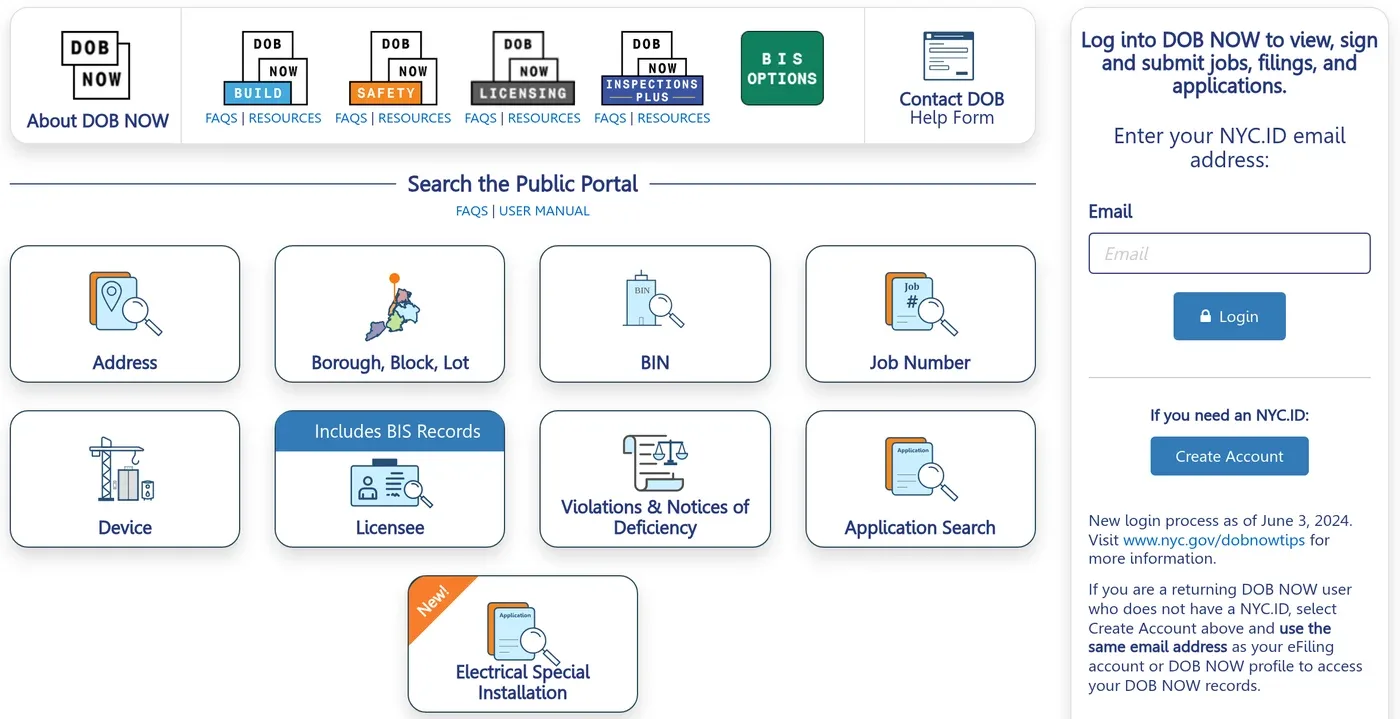
The public search needs no login. The login box on the right is for paying or filing.
Source: DOB NOW Public Portal, NYC Department of Buildings. Captured October 21, 2026.Option 2: NYC Open Data (every elevator at once)
The DOB Safety Violations dataset is the published copy of the same records. Open the Data tab, filter bin to your BIN and device_type to Elevators, and you’ll see every violation with its status: Active, Pending Dismissal or Dismissed. It’s the fastest way to check a portfolio.
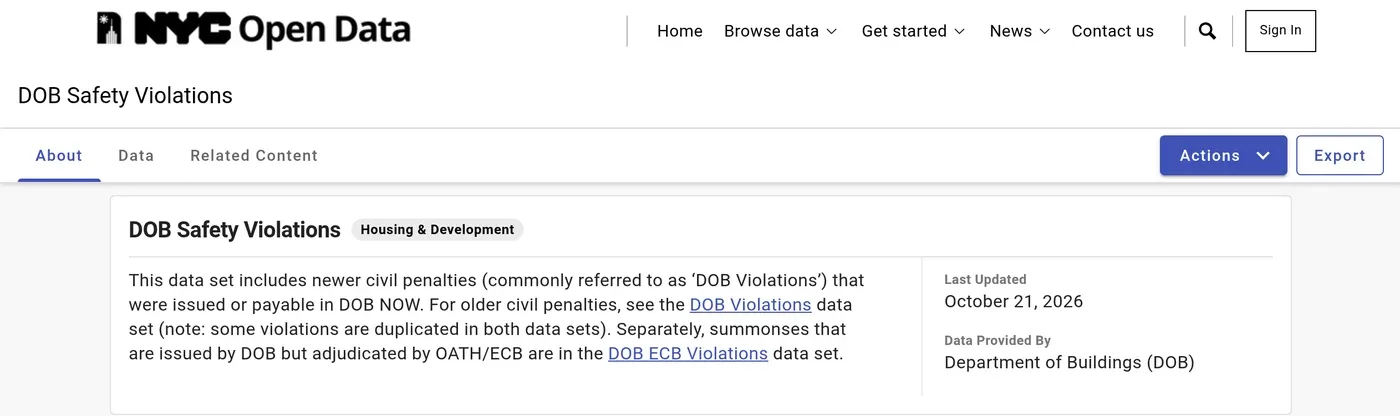
The dataset page also points to the older DOB Violations set and the separate ECB data.
Source: NYC Open Data, DOB Safety Violations. Captured October 21, 2026.Right now 176,237 elevator violations in that dataset show as Active. Plenty of those are old, from buildings that never cleaned them up, and they still turn up when a buyer’s attorney runs a search.
Your three options: challenge, waive, or pay
Before you pay anything, figure out which bucket you’re in. Paying first and asking questions later is the most common mistake we see, because once it’s paid you’ve given up the cheaper outcome.
| Option | When it fits | How |
|---|---|---|
| Challenge | The test or inspection happened in the cycle and was filed on time, or the defects were corrected and the AOC filed on time. | In writing within 30 calendar days of service, with proof, to the DOB unit that issued it. |
| Late filing instead | The test happened in the cycle, but the report went in after the deadline. | With proof, the late filing penalty applies: $150 per month per elevator, capped at $1,800, for most buildings. |
| Waiver | New owner, government owner, bankruptcy, elevator removed or newly certified, work in progress, building demolished or vacated. | DOB NOW: Safety, +Civil Penalty Waiver. $35 fee, one device and up to five violations per application. |
| Pay | None of the above apply. | DOB NOW: Safety, +Violations Payments. One violation per application. |
Sources: 1 RCNY §103-02 (i), (j), (k) and DOB Industry Notice, August 25, 2025. Late filing amounts are for commercial, mixed-use, and buildings with more than two residential units.
DOB’s compliance page is blunt about it: most failure to file violations can’t be dismissed without paying the full civil penalty. The waiver list is short and specific. “We didn’t know” and “our old elevator company was supposed to file” aren’t on it.
For reference, here’s what the main violations cost for most multifamily and commercial buildings:
| Violation | Penalty per elevator |
|---|---|
| Failure to file a Category 1 report | $3,000 |
| Failure to file a periodic inspection report | $3,000 |
| Failure to file a Category 3 or 5 report | $5,000 |
| Failure to correct defects and file the AOC on time | $3,000 |
| Late Cat 1 or periodic filing (test done on time) | $150 per month, up to $1,800 |
| Late AOC | $150 per month, up to $1,800 |
Source: 1 RCNY §103-02(i). One-family and two-family homes have lower amounts; see the DOB Elevator Compliance page.
How to pay or request a waiver in DOB NOW
Both happen in DOB NOW: Safety, and both need an NYC.ID login. DOB’s August 2025 notice spells out the clicks:
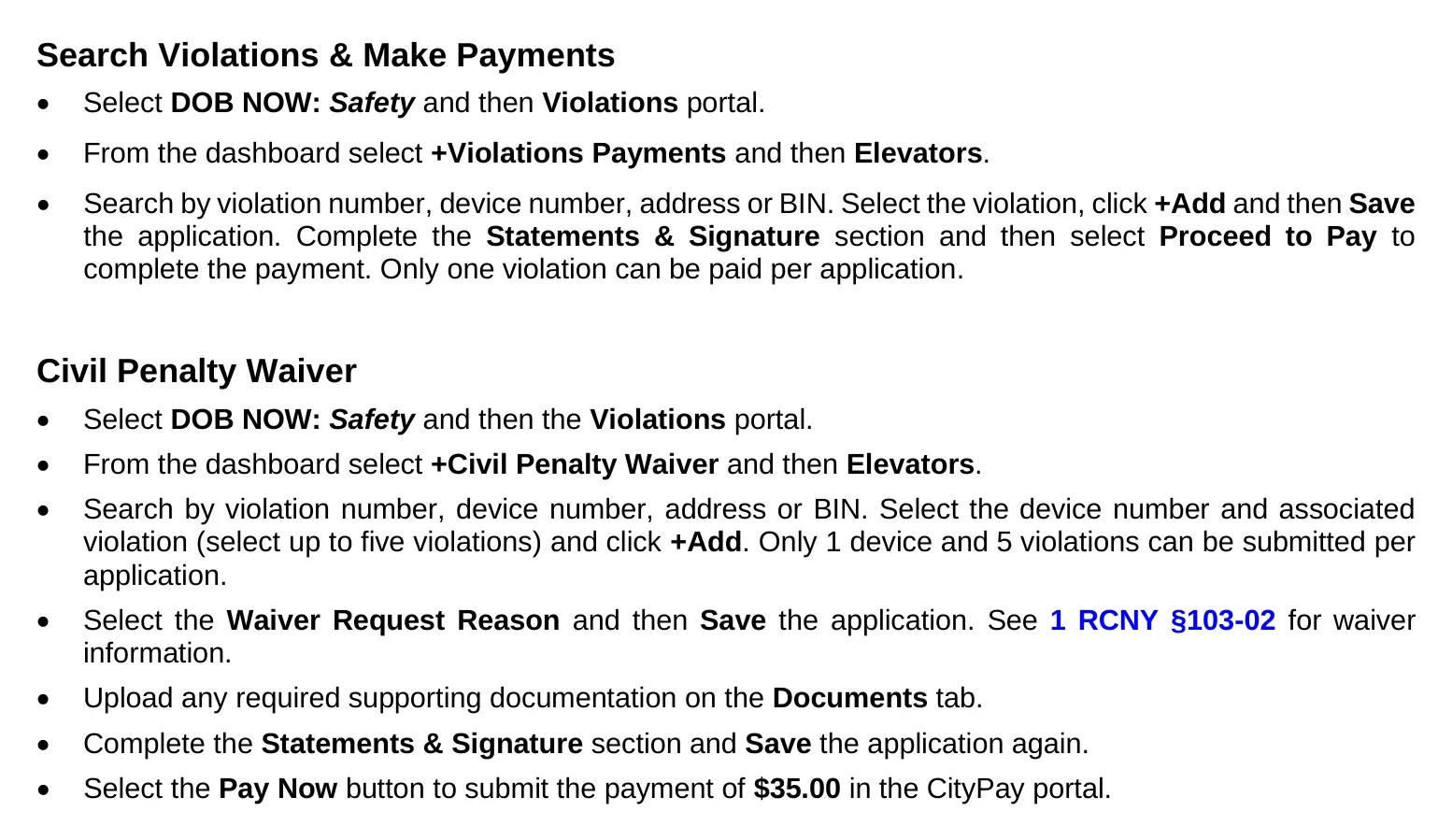
The payment and waiver steps as DOB published them.
Source: NYC DOB Industry Notice, August 25, 2025 (PDF). Captured October 21, 2026.A few practical notes from doing this for buildings:
- Payment methods. eCheck, credit card, PayPal or Venmo. Card, PayPal and Venmo carry a 2% surcharge. An eCheck can take up to 10 business days to process, so don’t wait until the day before a closing. DOB won’t take payment in person or by mail.
- One at a time. Payments are one violation per application. A building with four cars and two missed cycles is eight applications. Block out the afternoon.
- Waivers need paper. For a new owner, that’s the recorded deed showing the transfer happened after the penalty was incurred. For a removed elevator, it’s the permit and the sign-off. Upload it on the Documents tab before you pay the $35.
Clearing it for good
Here’s the part people miss. Per DOB’s notice, a violation stays on the property until the penalty is paid or waived and the current filing is in. The current filing depends on what the violation was for:
Getting from Active to Dismissed Order matters less than finishing all of it
-
Step 1
Look it up
Note the violation number, type (FTF or FTC), inspection (CAT1 or PER) and cycle.
-
Step 2
Pick a path
Challenge within 30 days if you have proof. Otherwise waiver if you qualify, or pay.
-
Step 3
Get current
File a current Cat 1 report, periodic inspection report or AOC, whichever the violation is about.
-
Step 4
Confirm
Check DOB NOW or Open Data until the status reads Dismissed. Keep the receipts.
Source: DOB Industry Notice, August 25, 2025.
If the violation is for a missed 2025 Cat 1, you can’t go back and test in 2025. What clears it is paying (or waiving) and having a current Cat 1 on file. That’s one more reason not to let this year’s test slide. Our guide on what happens if you miss a Cat 1 has the 2026 dates.
Checklist for each building
Tick items as you go; progress saves in this browser, and you can print a copy for the file.
Elevator violation cleanup checklist
0 of 8 done
From "NYC Elevator Violations: How Do I Look Up, Pay, and Clear Them?" by Faraday Elevator, faraday-elevator.com/blog/nyc-elevator-violations-look-up-pay-clear.html. General information, not legal advice.
How Faraday can help
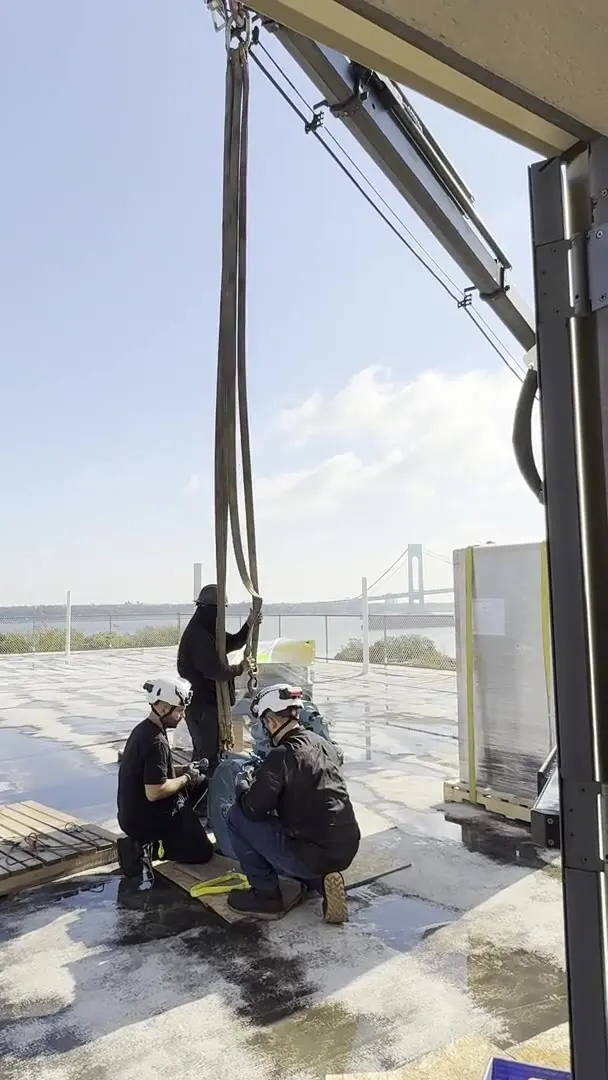
Faraday techs working a machine on a rooftop job.
Source: Faraday Elevator job site photoFaraday Elevator is a licensed NYC and NJ elevator company with Local Union No. 3 IBEW mechanics.
Most violations clear the same way: a current Cat 1 or Cat 5 test, the repairs it turns up, and the paperwork filed on time. We do the testing and repair side and coordinate the witnessing agency.
If violations keep piling up because filings get missed, that’s usually a contract problem. Pull out your maintenance agreement and check who is responsible for booking tests and filing reports. If it’s your elevator company and it keeps slipping, talk to us. If the elevator itself is down, see how long an NYC elevator can be out of service.
Frequently asked questions
How do I look up elevator violations for a NYC building?
Use the DOB NOW Public Portal and choose Violations & Notices of Deficiency, or search by address, BIN or device. You can also filter the DOB Safety Violations dataset on NYC Open Data by BIN and device type Elevators. Neither needs a login.
How do I pay a DOB elevator violation?
Log in to DOB NOW with an NYC.ID, choose DOB NOW: Safety, then the Violations portal, then +Violations Payments and Elevators. Search by violation number, device, address or BIN, add the violation, complete Statements & Signature and pay. Only one violation can be paid per application. DOB accepts eCheck, credit card, PayPal or Venmo, with a 2% surcharge on card, PayPal and Venmo. No in-person or mail payments.
Will paying the penalty clear the violation?
Not by itself. DOB's August 2025 industry notice says violations stay on the property until the penalty is paid or waived and a current Category 1 report, periodic inspection report or Affirmation of Correction is filed.
Can I get an elevator violation waived?
Only for the reasons listed in 1 RCNY §103-02, such as a new owner who took title after the penalty was incurred, government ownership, bankruptcy, an elevator removed or dismantled under a DOB permit, a new certificate of compliance, work in progress on a replacement or major renovation, or a building demolished or ordered sealed or vacated. Waiver requests are filed in DOB NOW: Safety with a $35 fee, one device and up to five violations per application.
Can I challenge a failure to file violation?
Yes, if you have proof the inspection or test was done and filed on time, or corrections were made and filed. Under 1 RCNY §103-02, the challenge must be made in writing within 30 calendar days of service of the violation and sent to the DOB unit that issued it. If the test was done in the cycle but the report went in late, the lower late filing penalty applies instead.
Sources
- 1.NYC DOB Industry Notice, August 25, 2025: Violations for Failure to File Report and Failure to File Affirmation of Correction
- 2.1 RCNY §103-02, Elevator inspections and tests, filing requirements, penalties and waivers
- 3.NYC Department of Buildings, Elevator Compliance
- 4.DOB NOW Public Portal
- 5.NYC Open Data, DOB Safety Violations
- 6.NYC Open Data, DOB ECB Violations
Rules and fees were checked against the sources above on November 2, 2026. Violation counts come from NYC Open Data as of November 1, 2026. This guide is general information, not legal advice. DOB sets and can change these requirements, so confirm current rules with DOB before you act.
This is not legal advice. Please speak with an attorney to discuss your specific situation and how the law applies to you.